


Egypt vs Iran
 2026 FIFA World Cup
26.06.2026 3:00 PM
Egypt vs Iran — 2026 FIFA World Cup
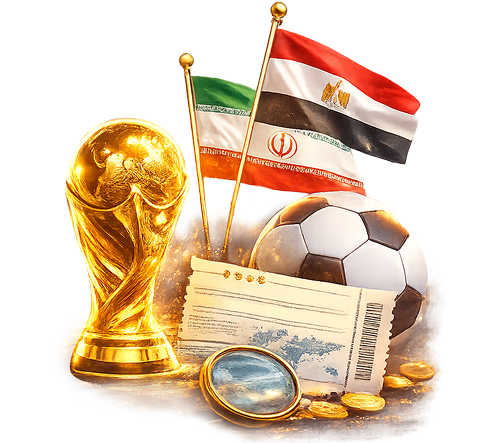
On June 26th, 2026, at 3:00 PM ET at Lumen Field in Seattle, USA, Iran will face Egypt in a group-stage clash at the 2026 FIFA World Cup. This preview explores both teams’ current structure, tactical identity, potential key performers, and the strategic nuances that could define the outcome.
📅 Date: June 26, 2026
📍 Stadium: Lumen Field, Seattle, United States
⌚ Kick-off: 3:00 PM ET
Set to be a compelling duel between West Asian tactical discipline and North African intensity, this encounter promises a measured yet explosive dynamic. Iran’s compact defensive organization and structured buildup contrast with Egypt’s fluid attacking transitions and individual creativity in advanced areas.
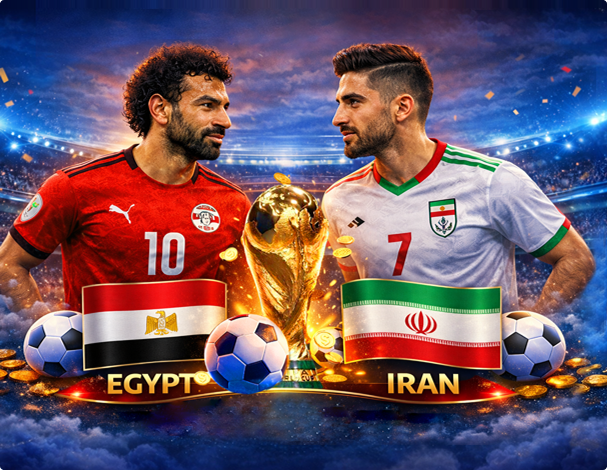
The match may begin cautiously, with both sides prioritizing shape and midfield control. However, once rhythm is established, the tempo should increase, opening channels for quick combinations and penetrating runs behind the defensive line. Iran’s well-drilled back line will test Egypt’s patience and precision, while Egypt’s pace in transition could expose even the smallest positional lapse. Ultimately, this contest may hinge on a single decisive moment — a turnover in midfield, a set-piece delivery, or a rapid counterattack. In a fixture where margins are razor-thin, discipline, composure, and clinical finishing will likely determine who walks away with the advantage.
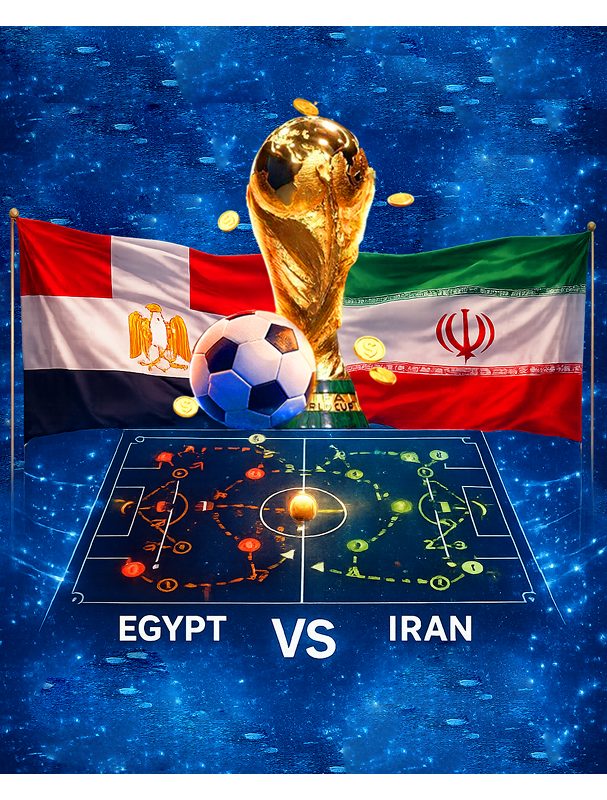
Tactical Preview
Look for morphing formations of 4-3-3s/4-2-3-1s with asymmetry when teams are in possession of the ball. Egypt will attempt to utilize half-spaces via a creative player behind Salah and wide overloads, while Iran will look to create turnovers in order to make diagonal runs into the channel. Set pieces could play a big part in the outcome: both sides have tall centre backs and will run a near-post routine.
Egypt
Egypt relies on a solid foundation of strong teamwork derived both from European leagues and Egyptian leagues. The Defensive Line will have a combination of experienced leaders like Ahmed Hegazi; Young prospects that play in Serie A (Italian League) along with wide defenders using more "underlap" than "overlap" when attacking will add balance between defense and offense. The Midfield consists of a "destroyer"/"regista" combination to produce quick vertical transition for their players; All ball recoveries will be directed quickly down to the right side of the field where they have professional player Mohamed Salah (gravity player) who will draw multiple defenders away from the ball creating good angles for a cutback pass. A forwards profile is needed to have the ability to receive a ball when he is faced away from the goal (mostafa Mohamed); Therefore he can keep two defenders occupied while inviting midfield runners, such as Trezeguet, to run late into the offensive zone (create space behind the defense). Throughout the African Cup of Nations, veteran championship players have dealt with so many different scenarios that they know how to maintain control during critical times in games; Champions League minutes also provide confidence as a player. In situations where they face patient defensive teams, usually they will start with a 5-4-1 formation and drop to a compact formation or "bunkered" to bait low-likelihood crosses to create two-pass counter attacks against their opponents.
Iran
Iran plays with the same characteristics of discipline, solidity in the air, and punishing errors without mercy as always. Their compact mid-block denies use of the half-spaces and forces opponents to play wide; their centre-backs, Morteza Pouraliganji, will easily win most first-contact duels; and their 'screening-killer' midfielder, Saeid Ezatolahi, will keep all cutbacks from getting through. In possession, quick diagonal switches and early crosses provide opportunities for one of their mobile attackers to work between the full-back and centre-back; these attackers are usually Mehdi Taremi or Sardar Azmoun. Transition remains their biggest weapon; they will steal the ball, then sprint to the ball, pass square, and score. Set-pieces (e.g. long throws, near-post flicks) regularly determine the outcome of closely contested matches, while their experience in the Asian Cup has prepared them well for making the right decision in the closing minutes of a match.
Key Players to Watch
Egypt
Mohamed Salah
Salah's attacking movement (e.g., acceleration, feinting, inside-out running) can break even the most structured defensive lines when faced with a 1v1 situation; his ability to remain composed when inside the box and sense where to take cutbacks makes even low probability goal-scoring opportunities feel like higher opportunity goal-scoring opportunities. On set-piece plays, ghosting to the back post in the first phase and getting off a shot in the second phase multiplies the options he has to score a goal.
Midfield Control
Tempo is determined by the balance in the central area of the pitch. Egypt’s midfield presence is established through the metronomic passing of Mohamed Elneny, coupled with relentless ball-winning from Hamdy Fathi, who secures the half-spaces, and the accurate and purposeful forward running of Emam Ashour, who has the ability to make incisive vertical carries to change the teams' attacking direction. Quick third-man combinations will regularly free either Mohamed Salah or Marmoush in the space between the left back and centre back, changing stable possession into an instant goal-scoring threat. Combined with Elneny constantly recycling possession while under pressure, Fathi anticipating and winning second balls, and Ashour breaking through the lines with his forward runs, Egypt creates a pressure-proof circulation, as well as rapidly gaining territory. Egypt's midfield creates chess-like rotations and pivots, with the use of compact drop-off blocks that turn into synchronized presses to disrupt rhythm.
Iran
Iran’s midfield distributors
In 2026 (June 27), Iran deployed a compact defensive shape with effective counter attacks. At the back, Hossein Kanaani leads the defense in winning duels while Milad Mohammadi uses his speed to win the ball back, and Alireza Beiranvand has the ability to stop the aerial threats. In midfield, Ezatolahi, Ghoddos, and Hajsafi send forward passes to both wingers and outside backs. Offensively, Mehdi Taremi’s ability to find spaces between the lines and Sardar Azmoun’s goal-scoring abilities in the box represent two key weapons that could change prognostications about Iran's chances; both have Champions League experience and clutch finishing performance records. Overlapping and underlapping runs from Sadegh Moharrami create opportunities to overload the wide areas. Iran will also use set plays as a weapon.
Strikers with pace
The way Iran plays through high-lines will ultimately define their attack. For example, when Allahyar runs past the last line of defense, he's able to stretch that line. Taremi exploits these cut-backs created by delaying his runs. Jahanbakhsh can also run under the ball, overloading the half-space, to create opportunities. Ezatolahi and Nourollahi can both play diagonal and wall passes to get runners started early, while Moharrami can whip in low balls on overlaps. An attacking swing to the 60–70 minute mark seems likely; fresh wingers could test tired full-backs. It is possible that exceptional defensive performances (Kanaani's time of front-foot interceptions, and Beiranvand commanding the air) could rival that of any of the marquee scorers as being game-changing.
Cultural and Tournament Notes
In North America, traveling to watch Egypt and Iran adds layers to strategy as they feature many fans from their respective diasporas, combined with commonalities in how much both teams embrace soccer, but with very different means: attacking with flanking speed vs. defense through team cohesion. The game will take place on 27 June 2026, in the middle of the group stage, and will have the greatest degree of tension; therefore, teams will likely protect a draw, while ambition will drive them to seek to improve upon their goal difference. The climate, and the long distance from home, could impact match rotations and squad depth due to climate and distance; therefore, additional players could be used to help relieve the pressures of distance and climate. Over the history of soccer in North America, there will be pressure-filled narratives (team captains are the emotional anchors, experienced coaches looking to gain small, repeatable advantages - using spaces between players during rest defense, creating trap situations on touchlines, and practicing set-pieces under the lights), all while maintaining the element of drama that surrounds their respective histories with one another.
Your Winning Edge: 1xBet Promo & Top Markets for Egypt vs Iran!
1xBet always remains the first resort in such an important match, offering an exciting promotional offer. Promotional offers for new customers can increase total value when combined with disciplined staking. For instance, consider betting on Double Chance to cover a conservative baseline, as well as Under/Over lines that correspond to current game tempo. In addition to Player Markets (e.g., shots on target for top-flight wing players & assists for inventive center-mid players), betting on corners can provide additional priced edges when a team is using mainly wide play to attack. The use of Draw No Bet can assist in risk management, and putting together an overall plan that includes both pre-game and in-game betting evidence can provide a coherent balance of both types of the betting evidence.
Conclusion
The narrow margins, resulting from Egypt's tight defensive formations and Iran's organized transitions, along with set pieces and fleeting moments of brilliance, will ultimately determine the outcome of this tournament. This match will be crucial and its course could change at any moment. Watch for any mistake from either team or any quick counter-attack. Every factor will be decisive, such as adhering to a specific plan, adjusting tactics, controlling the tempo of the game, and limiting individual attacks like those of Mohamed Salah. Iran will also look to launch quick counter-attacks into open spaces. When you win free kicks, make sure you capitalize on these opportunities! Most importantly, take the opportunity to analyze each team's playing style and bet accordingly, using both strategy and intelligence.
General questions (FAQ)
The latest continental performance statistics indicate that small differences can have a large effect on the nature of the opponent, depending on their character. The Egyptians are typically viewed as the team to beat because they have a very solid defensive and strong offensive style, and are led by Mohamed Salah. With that said, the Iranian team could change the way the game is played at any time.
High-pressure defenses reduce the number of shots taken, resulting in lower scores, but fast transitions can turn into high-quality scoring opportunities from very few offensive attempts. Therefore, expect to see a very small margin of victory; converting one transition or having one set-piece fail could decide this game. If an early goal leads to a change in the team's structure, live totals should be adjusted upwards if the pace increases thereafter.
In group matches of the World Cup, the total scores are typically low by past averages when two compact-looking or counter-punching (think of a boxer who scores points off an opponent during their early rounds) teams face each other. If early evidence indicates limited entries into the penalty area or few cut-backs, this supports an "Under" play. Conversely, if the wingers are successfully isolating their opposite side defenders (full-backs), this supports "Over" plays.
Elite wingers who generate fouls and make runs through the far post are great candidates for any time scorers. Look at markets associated with shots on goal or goal involvement (plus assists and rebounds) rather than just goals. If a player is a designated penalty taker, they have a much higher chance of scoring; so, double-check who your designated penalty takers are before the first whistle.
Teams that defend using narrow formations often allow for a greater number of crosses (which result in corners). If both teams tend to direct play toward the flanks of the pitch, we should also expect to see a higher number of corners, even in low-scoring games. We need to assess how often a referee will call a foul for contact; this can affect how many free kicks you have and make teams that are strong aerially more likely to be able to score from set pieces.
Style of play and incentives cause ties to be likely in the group stage. The Double Chance option provides a cushion for the standard deviation. The Draw No Bet option reduces payout for protection on any last minute tying goals. Your decision on these options should depend upon your willingness to accept risk and your perception of in-game control - if teams have equal territory, then you’ll need to consider using the protection options.
A fresh winger on the flank against a tired full-back equals a rapid change in the flow of the game. The opposition will often look to make a change in formation to capitalize on any counter-attack from the tired players, or for the winger to move inside to increase pressure on area 14 (8). The live market may not accurately reflect these mid-game transition opportunities for a brief period; they are often exploited during stoppages when substitution patterns indicate a change in strategy or style.